You are offline. This is a copy saved on this device, so details may have changed. Rules and safety advice are not kept offline.
Birds of Townsville
Birds you are likely to see around Townsville, and broad places to look. Watch from a distance, stay on paths, and never approach a nest.
Draft. These descriptions are written by Henari and have not yet been reviewed by a local birder.
Aussie Bird Count
The Aussie Bird Count runs from 19 October 2026 to 25 October 2026.
The Aussie Bird Count is on now, until 25 October 2026. Spend 20 minutes in one outdoor spot and note the birds you see.
The 2026 Aussie Bird Count has finished. Henari will add the next dates once BirdLife Australia confirms them.
Take part in the official Aussie Bird Count (aussiebirdcount.org.au)
Use the Henari count sheet. It times 20 minutes and keeps a tally on your device.
How the count works (aussiebirdcount.org.au)
Count dates checked . Submit counts through BirdLife Australia’s app or web form. Henari does not send your count anywhere.
Common birds
Show birds of:
-
Bush Stone-curlew
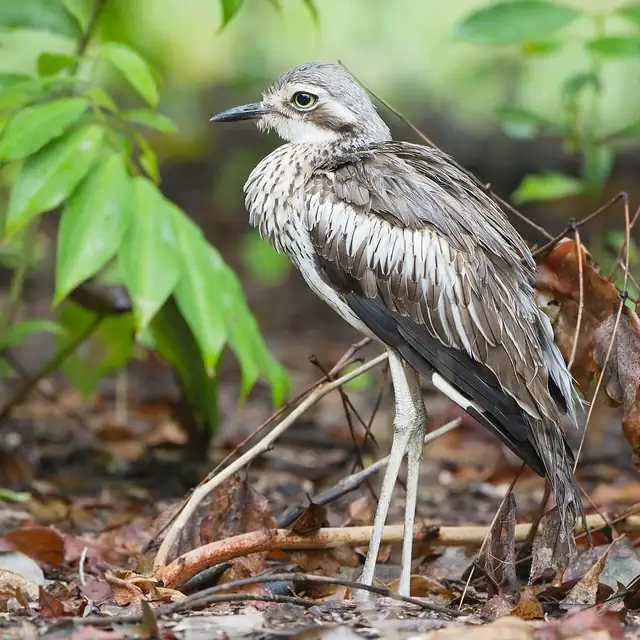
A Bush Stone-curlew in Cairns. Photo: JJ Harrison, CC BY 3.0, via Wikimedia Commons. Resized. Look for: A tall, grey-brown, long-legged bird with big yellow eyes, often standing very still on lawns and in parks.
You are more likely to hear one at night: a long, rising, wailing call.
-
Blue-winged Kookaburra
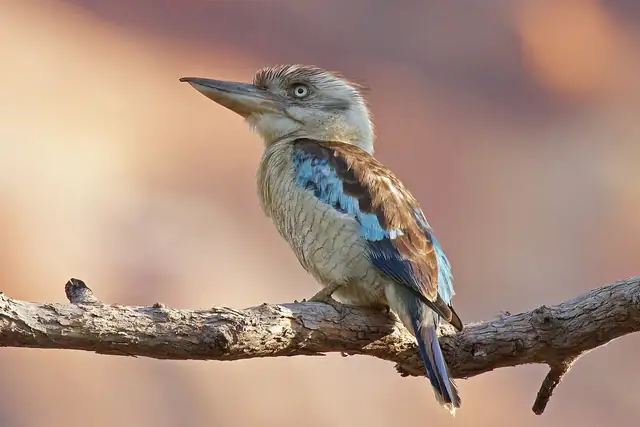
A Blue-winged Kookaburra in Kakadu National Park. Photo: PotMart186, CC BY-SA 4.0, via Wikimedia Commons. Resized. Look for: A large kingfisher with a pale eye and plenty of blue on the wings.
A northern kookaburra. Its call is harsher and less tidy than the Laughing Kookaburra’s.
-
Blue-faced Honeyeater
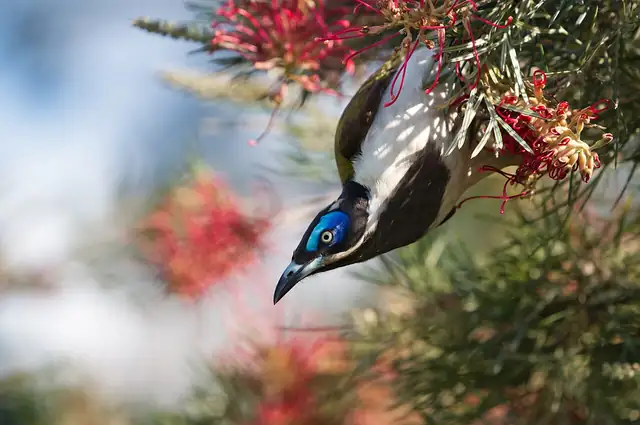
A Blue-faced Honeyeater in Brisbane. Photo: Andrew Mercer, CC BY-SA 4.0, via Wikimedia Commons. Resized. Look for: An olive-green back, white front, black head, and a patch of bright blue skin around the eye.
Often noisy around flowering trees and banana plants.
-
Australasian Figbird
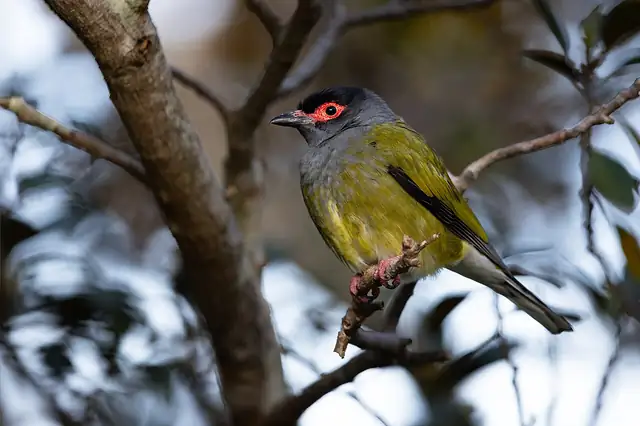
A male Australasian Figbird. Photo: JJ Harrison, CC BY-SA 4.0, via Wikimedia Commons. Resized. Look for: Chunky olive and yellow birds in groups. Males have red skin around the eye.
Look in fruiting fig trees, where small flocks gather.
-
Olive-backed Sunbird
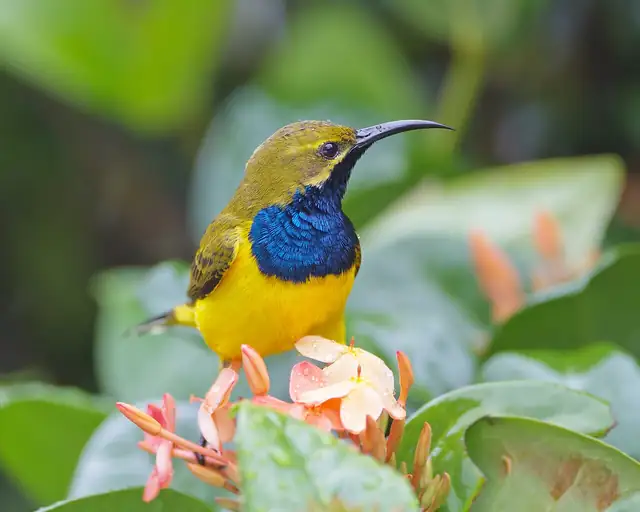
A male Olive-backed Sunbird near Thornton Beach, Daintree. Photo: JJ Harrison, CC BY-SA 3.0, via Wikimedia Commons. Resized. Look for: A tiny bird with a curved bill and a yellow belly. Males have a dark, shiny blue-black throat.
Builds a hanging nest that can turn up on verandahs and clotheslines.
-
Rainbow Lorikeet
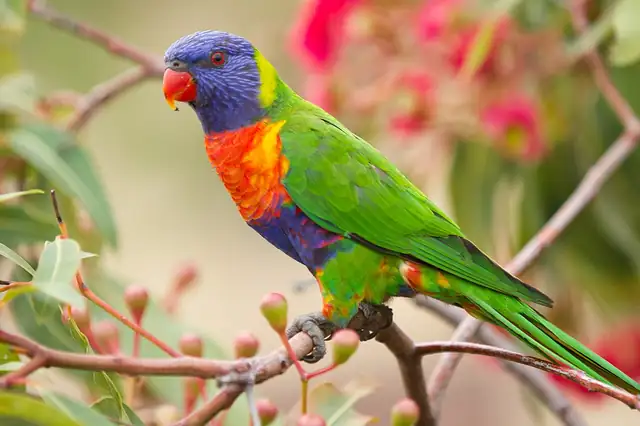
A Rainbow Lorikeet in Brisbane. Photo: Andrew Mercer, CC BY-SA 4.0, via Wikimedia Commons. Resized. Look for: A fast, loud parrot with a blue head, red bill, green back and orange chest.
Usually in pairs or noisy groups around flowering trees.
-
Magpie-lark
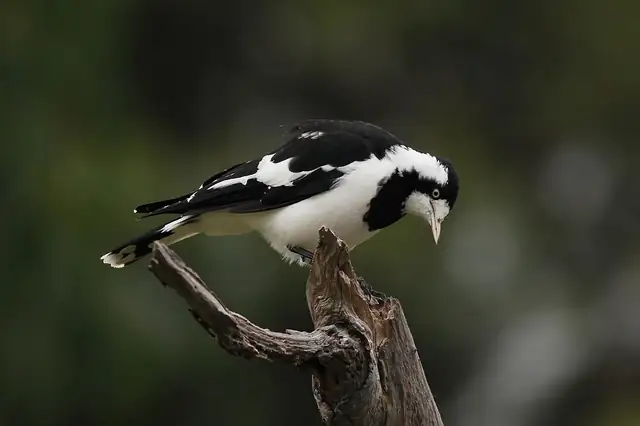
A female Magpie-lark in Melbourne. Photo: Wayne Butterworth, CC BY 3.0, via Wikimedia Commons. Resized. Look for: A black and white bird about the size of a pigeon, walking on lawns and footpaths.
Also called a peewee. Pairs build cup-shaped nests out of mud.
-
Masked Lapwing
Look for: A brown-backed, white-fronted bird with a yellow face mask, on open grass.
Nests on the ground and defends it loudly. Give nesting birds plenty of space.
-
Brolga
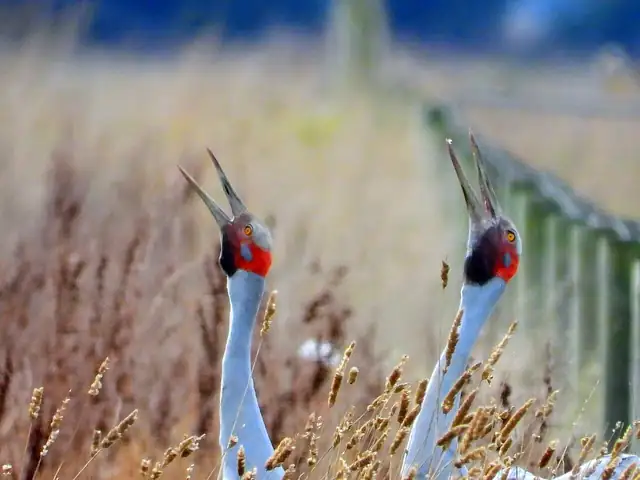
Brolgas at Werribee, Victoria. Photo: Pedramxp, CC BY-SA 4.0, via Wikimedia Commons. Resized. Look for: A very tall grey crane with a red head.
Watch from paths and hides at wetlands such as the Town Common. Do not walk towards them.
-
Magpie Goose
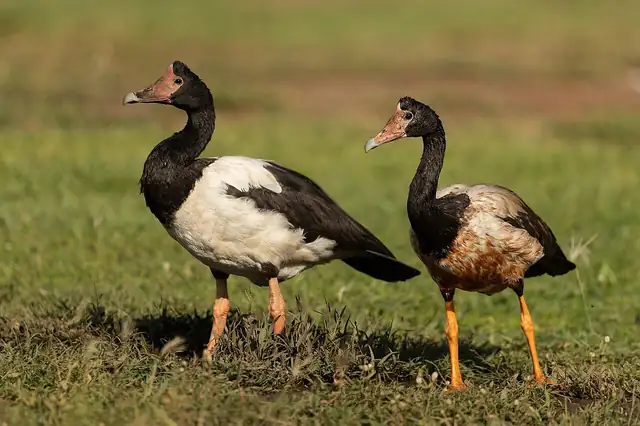
Magpie Geese at East Point, Darwin. Photo: JJ Harrison, CC BY-SA 4.0, via Wikimedia Commons. Resized. Look for: A large black and white goose with a knob on top of the head and orange legs.
Gathers in groups on shallow wetlands.
-
Rainbow Bee-eater
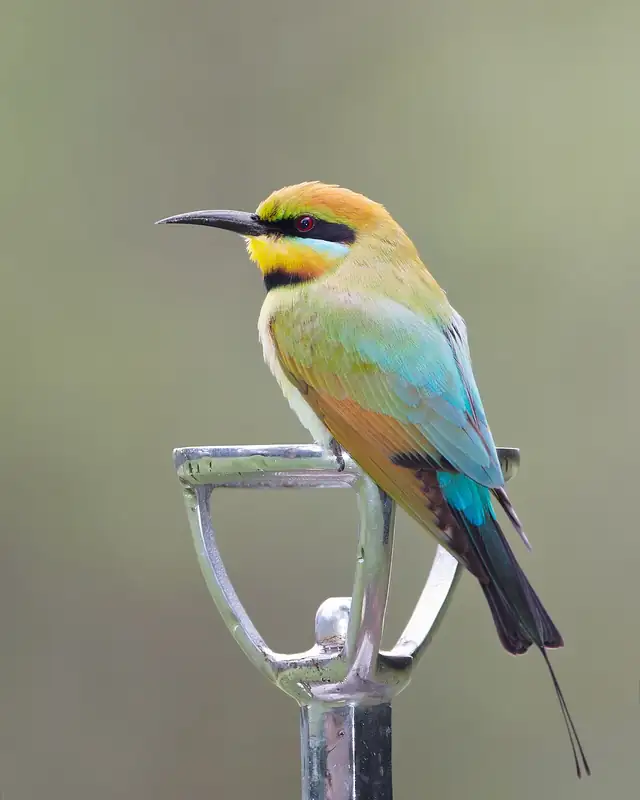
A Rainbow Bee-eater in Cairns. Photo: JJ Harrison, CC BY 3.0, via Wikimedia Commons. Resized. Look for: A slim, colourful bird with a long, thin, curved bill and a black stripe through the eye.
Catches insects in flight, then returns to a perch.
-
White-bellied Sea-Eagle
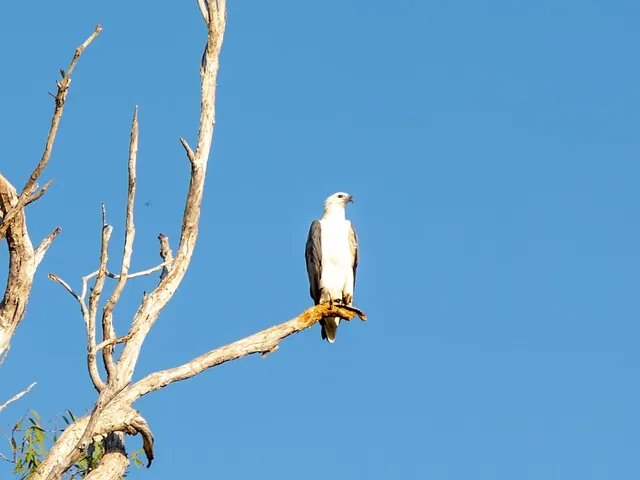
A White-bellied Sea-Eagle at Yellow Water, Kakadu National Park. Photo: Dietmar Rabich, CC BY-SA 4.0, via Wikimedia Commons. Cropped and resized. Look for: A large eagle, white underneath with grey wings, soaring over the coast and rivers.
Watch from a distance and never approach a nest.


May be out of date. Henari has not reviewed these bird notes recently.
Where to look
- Townsville Town Common Conservation Park. Wetlands and woodland on the city’s edge, with walking tracks and bird hides.
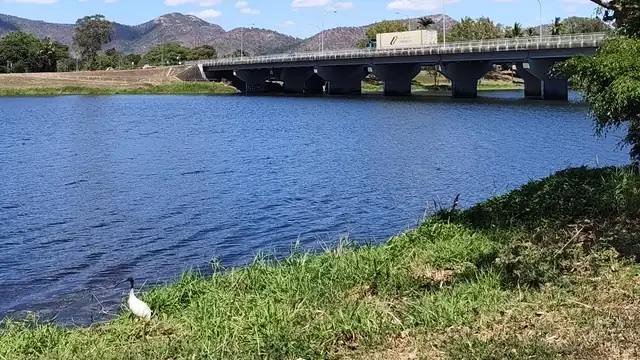
- Ross River and Riverway. Shared paths beside the river, with water birds and parkland birds.
- Anderson Park and the Palmetum. Botanic gardens with shady paths. Good for honeyeaters, figbirds and sunbirds.
- The Strand and the foreshore. A long seafront path. Look for sea-eagles, terns and shorebirds.
Council and BirdLife Townsville publish a guide to accessible birding places.
Learn more
- Wildlife, including birdwatching (townsville.qld.gov.au)
- Waterways and wetlands (townsville.qld.gov.au)
- BirdLife Townsville (birdlife.org.au)